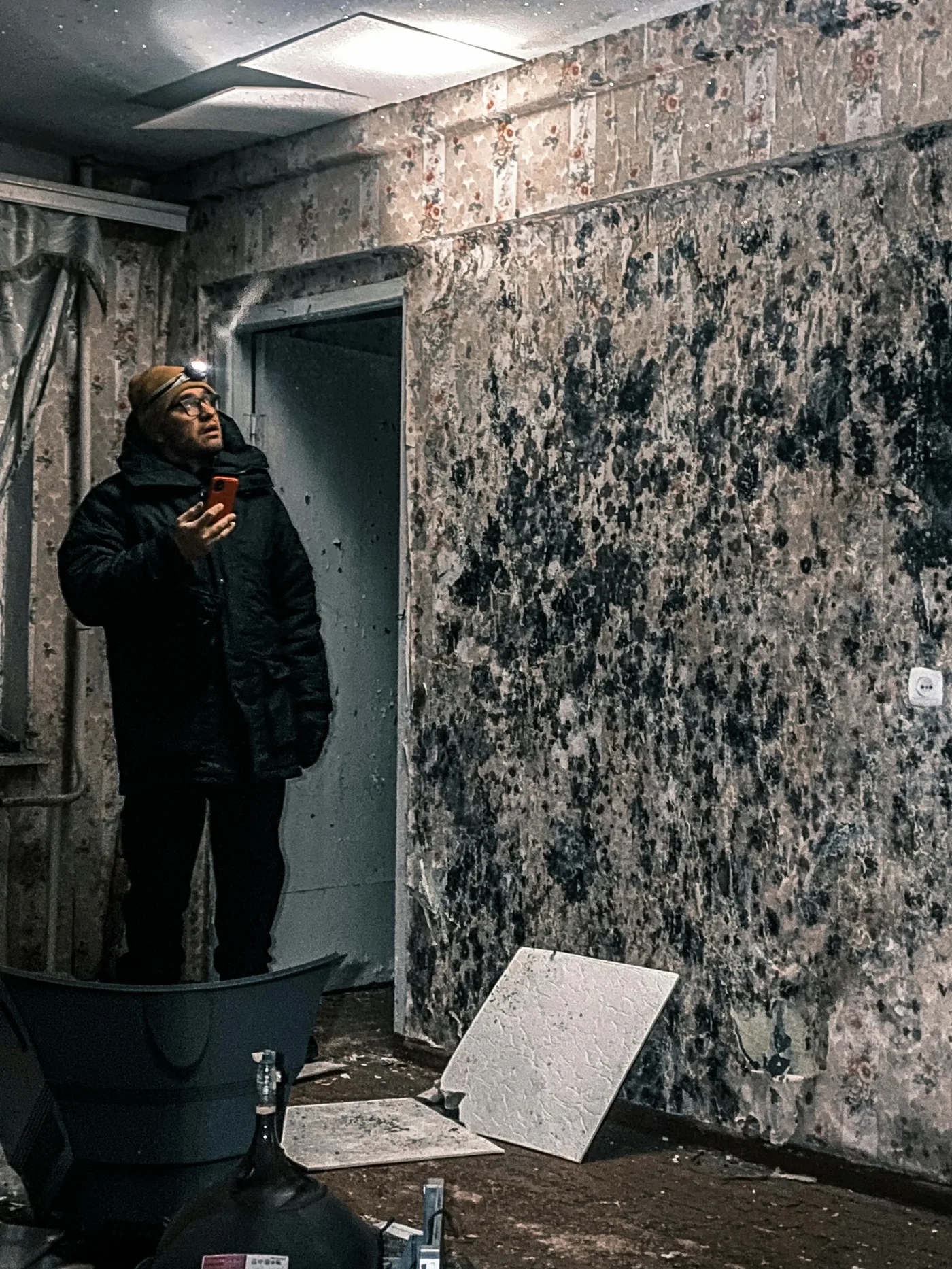
Mold Remediation Boise Idaho
IICRC Certified • Free Inspections • 24/7 Response • Serving the Treasure Valley
Call (208) 717-3176 — Free InspectionMold remediation in Boise, Idaho requires more than wiping down a surface with bleach. When mold colonizes drywall, wood framing, attic sheathing, or crawl space joists, surface treatment does not reach the root structure of the growth — and within weeks, it returns. Our IICRC-certified mold remediation team in Boise follows the S520 standard: source identification, full containment, HEPA filtration, surface removal, and post-remediation verification (PRV) clearance testing to confirm the space meets pre-remediation baseline levels. Boise’s climate — cold winters with interior condensation risk, spring snowmelt infiltrating crawl spaces, and warm dry summers that trap moisture in attics — creates recurring mold conditions that demand professional remediation, not DIY treatments. Call (208) 717-3176 for a free mold inspection.
Mold Remediation Services in Boise, Idaho
Mold remediation is not a single service — it is a protocol that varies based on the mold type, the affected materials, and the extent of colonization. Our Boise mold remediation services cover:
- Inspection and air quality testing — moisture mapping, visual assessment, and spore sampling cassettes to identify the mold species and spore count
- Attic mold remediation — the most common large-scale mold scenario in Boise homes; treated differently than wall or floor mold due to access and airflow requirements
- Basement and crawl space mold removal — common after spring snowmelt or plumbing failures; requires addressing the moisture source before remediation begins
- Post-water-damage mold — mold that establishes after water damage that was not properly dried; the most preventable category
- Post-remediation clearance testing — air samples taken after remediation to verify spore counts have returned to baseline; required before reconstruction begins
For mold that developed after water damage, see our water damage restoration boise idaho page — the underlying moisture problem must be resolved before mold remediation can hold.
Ready to schedule a free mold inspection in Boise?
(208) 717-3176 — Call NowTypes of Mold Found in Boise Homes
Not all mold is black, and not all mold is Stachybotrys. Understanding what you’re seeing helps clarify urgency — though any visible mold in a living space warrants professional assessment.
Green Mold
Green mold is the most commonly encountered household mold variety. Is mold green? Often, yes — several of the most prevalent species in Boise homes present as shades of green. Cladosporium is a dark olive-green mold that grows on walls, wood surfaces, and HVAC duct lining. Penicillium presents as blue-green mold — fuzzy in texture, often found in damp basements or on water-damaged materials. Aspergillus can appear as green mold on walls, in attics, and on stored materials. None of these are benign at high concentrations, though none are the toxic black mold that dominates public conversation.
What causes green mold? Moisture. Green mold in a basement almost always traces to a moisture intrusion source — seeping foundation wall, condensation, or standing water. Green mold in house attic spaces typically traces to inadequate ventilation combined with warm moist air from living spaces. If you see fuzzy green mold on walls, green powdery mold on wood, or green dusty mold on ceiling surfaces, call (208) 717-3176 — visible growth is the tip of the iceberg.
Black Mold
Stachybotrys chartarum — what most people call “toxic black mold” — requires sustained wet conditions (water-soaked drywall or wood held wet for weeks) to establish. It is less common than Cladosporium or Aspergillus but more serious when present. True black mold has a distinctive slimy texture and a strong musty odor. If you suspect black mold after a long-undiscovered water leak, do not disturb it — contact our Boise mold remediation team immediately for containment.
White and Grey Mold
White or grey mold is frequently Trichoderma or early-stage Aspergillus — common in crawl spaces, on wood framing, and on concrete block surfaces. It is often the mold that appears after a pipe burst that was partially cleaned but not fully dried.
Attic Mold Remediation in Boise
Attic mold remediation is the most frequently underestimated mold scenario in Boise homes. Most homeowners never see their attic — and most attic mold is discovered during a home sale inspection or after a re-roofing project reveals stained sheathing. Common causes in the Boise area:
- Inadequate soffit and ridge ventilation trapping warm, moist air from the living space
- Bathroom exhaust fans vented into the attic instead of through the roof
- Roof leaks from ice dams (common in Boise winters) that wet sheathing and framing
- Attic access points that allow conditioned air to leak into unconditioned space
Our attic mold remediation process involves full containment of the attic space, HEPA vacuuming of loose spores, treatment of affected sheathing and framing with EPA-registered antimicrobial agents, and — where structural damage is present — removal and replacement of compromised materials. We do not attempt to encapsulate mold on structurally compromised wood. We remove it.
Call (208) 717-3176 for an attic mold inspection in Boise, Idaho.

Basement Mold Removal in Boise
Basement and crawl space mold removal in Boise is a spring and early summer issue more often than not. Treasure Valley snowmelt raises groundwater tables, and even well-sealed foundations experience seepage during high-moisture periods. Green mold in basement spaces — on block walls, on wood framing, on stored cardboard — is a consistent post-winter finding in Boise homes.
Basement mold remediation begins with identifying and addressing the moisture source. No mold remediation holds if the moisture that caused it is still present. Once the source is controlled, our team establishes negative air pressure containment, removes affected materials, treats surfaces, and verifies clearance with post-remediation air sampling. Can water damage cause mold on hardwood floors? Yes — and basement slab moisture wicking up through hardwood is a specific failure mode that requires both the floor treatment and the moisture barrier solution. Call (208) 717-3176 to schedule a basement mold inspection in Boise.
Our Mold Remediation Process
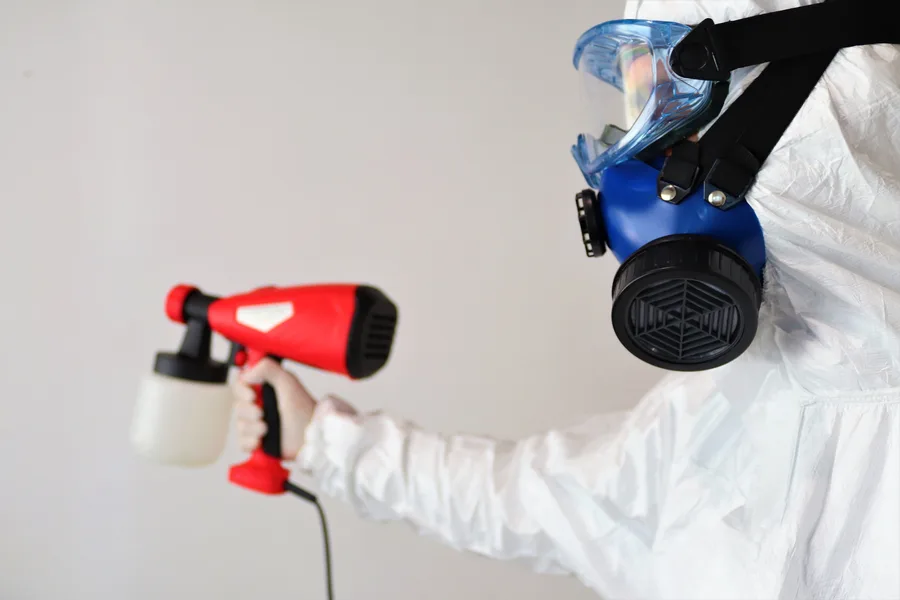
Our Boise mold remediation process follows IICRC S520 protocol:
-
Inspection and Moisture Mapping — moisture meters, thermal imaging, and visual assessment; spore sampling if needed to identify species and establish pre-remediation baseline
-
Containment — negative air pressure containment barriers isolate the affected area; helps prevent cross-contamination of adjacent spaces during remediation
-
HEPA Air Filtration — HEPA scrubbers run continuously throughout remediation to capture airborne spores
-
Removal and Treatment — affected porous materials (drywall, insulation, wood with deep penetration) are removed; non-porous surfaces are cleaned and treated with EPA-registered antimicrobial agents
-
Post-Remediation Verification — air samples taken after completion and compared to the pre-remediation baseline; clearance certificate issued when spore counts confirm successful remediation
How long does mold remediation take? Most residential projects in Boise run 1 to 3 days for the remediation phase. Attic projects with significant structural involvement can run 3 to 5 days. The post-remediation clearance sample adds 24 to 48 hours for lab turnaround. Reconstruction (replacing drywall, insulation) follows clearance and is a separate scope.
Does Insurance Cover Mold Remediation in Idaho?
Mold remediation is covered by homeowner’s insurance when the mold resulted from a covered water damage event — a burst pipe, an appliance failure, or roof leak damage that was sudden and accidental. Is mold remediation covered by insurance in cases of gradual moisture accumulation? Typically not — slow leaks that accumulated over months are treated as maintenance failures and excluded from most policies. We document our findings thoroughly to support your claim and can communicate directly with your adjuster. Call (208) 717-3176 for a free inspection and to discuss insurance coverage for your specific situation.
Serving Boise, Meridian, Nampa and the Treasure Valley
Our Boise mold remediation team covers the full Treasure Valley, including Eagle mold remediation calls, mold remediation meridian id, Nampa, Caldwell, and all surrounding communities. For mold that followed a water damage event, start with our water damage restoration boise idaho page — the two services frequently go together.
Get a Free Mold Inspection in Boise, Idaho
Visible mold is the tip of the iceberg. Call (208) 717-3176 for a free mold inspection — our IICRC-certified technicians will identify the source, assess the extent, and walk you through your remediation options. No obligation.
Free Inspections • IICRC Certified • Post-Remediation Clearance Testing
Frequently Asked Questions About Mold Remediation in Boise
-
The first signs are usually odor — a musty, earthy smell that was not present before the water event. Visible discoloration on drywall, around window frames, or on wood surfaces follows. Mold on shower walls or tile grout is a separate issue from post-water-damage mold — the latter penetrates beneath surface materials into structural assemblies. If you had water damage that was not professionally dried to IICRC drying goals, assume mold is possible and schedule an inspection.
-
Yes, when it results from a covered water damage event. No, when it results from gradual moisture accumulation or deferred maintenance. Document the connection between the water damage and the mold growth — that documentation is what drives the coverage decision.
-
One to three days for most residential projects. Larger attic or crawl space projects may run three to five days. Lab clearance sampling adds 24 to 48 hours. Reconstruction follows clearance.
-
For contained small-area projects (one room, bathroom, crawl space), typically yes — the negative air pressure containment helps prevent cross-contamination. For whole-attic or multi-room projects, temporary relocation during the active remediation phase is recommended. Our team will advise on a per-project basis.
-
Green mold is most commonly Cladosporium, Penicillium, or Aspergillus — three of the most common indoor mold genera. All three can cause respiratory irritation at elevated concentrations, particularly for people with asthma, allergies, or compromised immune systems. None are considered as hazardous as Stachybotrys (black mold), but none should be left untreated. If you see green mold in your house, schedule an inspection.
-
Persistent moisture. Green mold on walls indicates a moisture source — a slow plumbing leak behind the wall, condensation from a cold surface, or water intrusion from outside. The mold is the symptom; the moisture is the problem. Treating the mold without resolving the moisture source results in recurrence within weeks.
-
Yes, though bathroom surface mold is typically Cladosporium or Mildew — both respond to cleaning with appropriate antimicrobial products if caught early. If you see mold on shower walls that returns quickly after cleaning, or if grout is deteriorating, there may be moisture infiltrating behind the tile. That scenario requires professional assessment — tile mold that has penetrated into the substrate is a remediation job, not a cleaning job.
-
Yes. Hardwood floors are hygroscopic — they absorb and release moisture. Water that penetrates the finish layer and reaches the wood can cause swelling, cupping, and if not dried quickly, mold growth beneath and within the boards. For flooded basement scenarios where hardwood flooring is involved, the floor must be assessed for moisture content before determining whether it can be dried in place or must be replaced.